Back

Redefining Death, Reaffirming Life

00:00
00:00

A pregnant woman is declared “brain dead” and then her body keeps doing things that look unmistakably like life: healing, digesting, fighting infection, and sustaining a growing child.

We sit down with Dr. William Lyle (OB-GYN), Dr. Jeffrey Bishop (bioethics and philosophy), and Dr. Heidi Klesig (anesthesiology and pain management) to unpack how the modern brain death definition developed, why the 1968 Harvard criteria still spark controversy, and how organ transplantation and ICU ethics shaped the way medicine talks about death. We also dig into the “squishy” historical window where practice, law, and philosophy did not neatly match, and why that matters for end-of-life decisions today. Then we face the hardest test case: a pregnant woman declared brain dead and the medical and moral decisions surrounding continuing life support to give her unborn child a chance.

Make an impact. Share this program on social media and email.

Resources

The Case of Adrianna Smith and Fighting for Every Life

Adriana Smith is the 30-year-old mother of a seven-year-old son as well as her unborn son. When Adriana was nine weeks pregnant, she went to the hospital due to the severe headaches she was experiencing. Though she was given medication, the hospital did not conduct a CT scan. The next day she was taken to the hospital where it was discovered that she had blood clots in her brain. Adriana underwent surgery to remove the clots but was later declared brain dead. See more about a diagnosis of brain death below.

Read full article

Life & Hope Network

The Terri Schiavo Life & Hope Network advocates for patients and their families by championing the essential qualities of human dignity.

When patients and families face life-and-death decisions, we provide the guidance, resources, and support they urgently need. Our 24/7 Crisis Lifeline connects them with expert help in navigating complex medical situations and protecting their loved ones from denial of care or unethical practices. Every day, through this lifeline and ongoing advocacy, we stand beside those most at risk.

Learn more

Questions Surround Definition of Brain Death

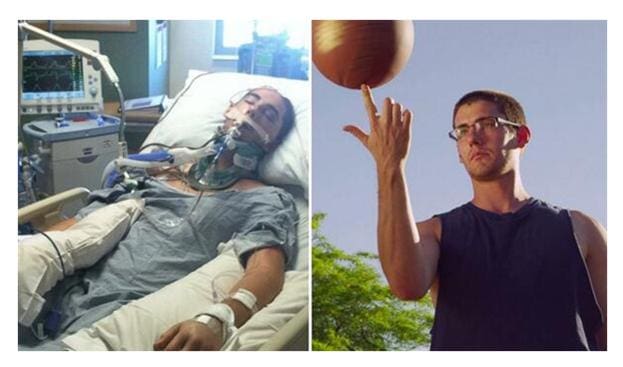
21-year-old Sam Schmid had just finished coaching a basketball team at his former school. He was driving his Jeep when a van crossed into his lane, causing his vehicle to go airborne. Sam suffered critical head injuries so severe that he had to be airlifted from the local hospital to St. Joseph’s Medical Center in Phoenix, AZ. Although he received surgery for a life-threatening brain aneurysm, his prognosis was grim.

Read the full story

The Dangers of Brain Death Diagnosis

Many well-meaning people sign up to donate their organs when they die. However, what they may not know are the dangers of a brain death diagnosis and how it relates to organ donation. 

At one time the American Academy of Neurology stated on their website, “Many of the details of the clinical neurologic examination to determine brain death cannot be established by evidence-based methods.

Read full article


Escaped Death Twice

Lewis Roberts narrowly escaped death—twice.  The first time when the teenager was hit by a van.  The second was more dramatic.  Just four days after his accident, doctors told Lewis’ family there was “zero chance” of him recovering.  They officially certified him as dead and reported his “death” to the coroner and the family agreed to donate his organs.

Listen to full program

Persistent Vegetative State: It’s Not What We Thought

A startling discovery published in the journal Nature has dramatically upset the applecart. Conventional wisdom believed that a person in a persistent vegetative state (PVS) was someone who was lying there, unresponsive, like a vegetable. We strongly disagree with the term “persistent vegetative state,” because it dehumanizes the patient.

Read full article

Guests

Dr. William Lile is board certified in obstetrics and gynecology. He has served as a hospital OB/GYN Department Chair and as an instructor with both the University of Florida and Florida State Medical School OB/GYN residency programs.  A passionate pro-life advocate, Dr. Lile took over a practice that was the largest provider of abortion services in Pensacola, Fla., and immediately put an end to those services. He is part of a nationwide network of 500 physicians who voluntarily perform abortion pill reversals and serves as a medical adviser for the Florida Human Life Protection Amendment.  

Dr. Jeffrey P. Bishop, is Professor of Philosophy and Theological Studies at Saint Louis University, where he holds the Tenet Endowed Chair in Bioethics. He is the author of over 75 scholarly articles and two award winning books: The Anticipatory Corpse, Notre Dame, 2011 (named the most important book published in 2011 by the Australian Broadcasting Corporation Religion and Ethics Page) and Bioethics after Neuroscience, (co-authored with M. Therese Lysaught and Andrew A Michel, Bloomsbury, 2022, winner of the Expanded Reason Award 2021). Bishop serves on the editorial board of the Journal of Medicine and Philosophy and of Christian Bioethics.

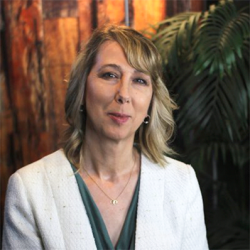
Dr. Heidi Klessig received the American Board of Anesthesiology’s board certification in anesthesiology and the ABA’s certificate of added qualification in pain management. She attended medical school at UW-Madison, where she completed a residency program in anesthesiology. She received the American Board of Anesthesiology’s board certification in anesthesiology and the ABA’s certificate of added qualification in pain management. She was a founding partner of the Pain Clinic of Northwestern Wisconsin and an instructor for the International Spinal Injection Society. 

Leave a Reply

Your email address will not be published. Required fields are marked *