
Life Issues Institute Co-Founder and President Emeritus Brad Mattes recently traveled to Africa to help aid in life-changing medical aid. The following article shares his incredible experience.
We flew to Inhambane, Mozambique, a poor region of the country. Upon landing we drove directly to Inhambane Provincial Hospital. It was impossible to miss the vast disparity in medical standards between this aging facility and American hospitals.
Upon our arrival scrubs, booties, and hair caps were distributed from the back of one of the Doctors for Life trucks.
The team consisted of about 19 people. As Ellen and I witnessed everyone springing into action it immediately became clear to us that this wasn’t their first rodeo. Every detail was planned down to the rubber gloves. Everyone functioned like a well-oiled machine, all done to the high standards set by Doctors for Life.
Overall coordination was done by my dear friend Johan Claassen and new friend Mario Rocha, the clinic manager.
Three surgeons performed cataract surgeries, aided by other members of the team. The days were long and hard, beginning at 6:00 am.
One of the microscopes used for the surgical procedures was equipped with a monitor so observers could watch the delicate dance between surgeon and patient. The diseased lenses were thick and totally opaque, making vision impossible.
As soon as one patient was helped from the operating table, another was ushered in. Patients returned the next morning to have their bandages removed and to test the success or failure of the surgeries.
It was fascinating to observe in theatre. Not only was this an education but we had an ulterior motive. It was one of the few places equipped with air conditioning. The tropical weather was very warm accompanied by heavy humidity.
Work often continued in theatre until 8:00 pm, after which we had a long drive to the lodge located on the Indian Ocean. High tide brought the waves up to and underneath our sleeping quarters. There was no air conditioning but fans at the foot of our beds helped with sleep. Beds were equipped with mosquito netting, and we all took careful precautions to prevent malaria.
The day after their surgeries, patients gathered in a large room. Ellen and I would guide them one-by-one to the exam room. Those moments of taking patients by the hand reminded us of what a blessing it was to serve others, knowing that the outcomes were by God’s direction and mercy. These were precious moments for me.
We were present while local doctors removed patients’ bandages. Immediately after, patients were asked to read letters on a standard eye chart to determine the result of their procedure.
While this brief examination was a common occurrence for the physicians, to Ellen and me it was a huge moment in the lives of the patients. When it became evident the patients could see, I clapped my hands in joyful celebration! Eventually even the local doctors joined in.
Once the last post-operative patient was seen, Ellen returned to theatre to assist Peter Bos with recording each patient in the logbook. She also located the specific required lens which she then placed at the foot of the operating table until needed by the surgeon.
For many patients this was their first experience with a doctor, and the encounter could be traumatic. When a patient needed a comforting hand, Ellen was quick to be at their side throughout the procedure.
I remained with the post-operative patients. Then with the help of a translator I interviewed some who had been totally blind.
Life had been difficult for both the patients and their caregivers who had full-time jobs plus cared for their loved ones. In one case the son had strung rope from the bedroom to toilet, to kitchen, etc. to help his mother navigate her home.
I asked the patients what they looked forward to the most. All said they’d be able to work in the garden which they relied on as a critical source of food. One said she had never seen her grandchildren’s faces and looked forward to gazing at them. In the end, the team performed 120 procedures in five days! A remarkable feat with God’s help.
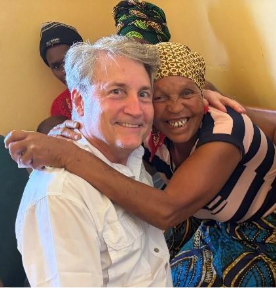
Would we do this again? It was difficult work, yet God allowed us to experience the sheer joy of being a small part of serving our fellow man. These happy memories will continue to bless us for a lifetime.
If an elderly woman who had just regained her sight put her arms around your neck and squeezed with all the enthusiasm she could muster, you too would want to return for more!
Leave a Reply